My Long Awaited Day
A Faithful Call for True Reconciliation in The Church of Jesus Christ of Latter-day Saints

By Dana King
June 1, 2025

Part 1 – The Truth About Us
When I was nine years old, I felt God’s unmistakable voice tell me that this was His Church. I was baptized a convert in 1971. I had found the restored gospel, and I knew I was where I needed to be. My faith was simple, rooted, and unshaken.
As I grew into my teenage years, my understanding deepened—but so did my questions. I was deeply troubled to learn that Black members of the Church were restricted from holding the Priesthood and receiving Temple blessings. I didn’t have any Black friends to help me understand their experience, and no one around me seemed to wrestle with this reality. If they did, I didn’t know how to open up to them. I was young, but something in my heart told me: this wasn’t right.
How could we preach that “all are alike unto God” (2 Nephi 26:33) while upholding a restriction based on the notion of a generational curse—a notion that directly contradicts the teaching that we are held accountable for our own sins, not the sins of others? I had no one to help me process that discomfort. So, I did what we’re often taught to do with the things we don’t understand—I put it on my spiritual shelf.
I knew in my heart that my Heavenly Father was not the author of such a restriction and told myself that He would help me understand one day. I looked forward to the long-awaited day.
In 1978, it happened.
The day came, and I felt relief. The ban was lifted. I allowed myself to believe that this chapter had closed—that we, as a Church, had moved forward. That Zion was closer.
But I was wrong.
Still today, I hear disparaging comments about Black people, and I witness myths and misconceptions persisting. I see good people remaining silent in the face of injustice. I hear hurtful things said that, with a bit more awareness and humility, would never be spoken in the presence of a Black brother or sister. It is painful and disorienting.
We are not a hateful people, but we are a people shaped by inherited ideas—narratives that distort truth, dull spiritual vision, and delay our advocacy.
Surrounded by competing narratives—and so few that honor Black people—I asked, “Lord, is it I?” What might I be missing? That question launched me into deeper study, reflection, and conversation. And still, I am uncovering blind spots—having absorbed lies, half-truths, omissions, and mischaracterizations, many perpetuated by trusted teachers, leaders, and cultural institutions.
I’ve had to sit with the sobering truth that many things are not as they first appear. In a world full of noise, contradiction, and complexity, I’ve learned to listen more carefully—to seek clarity beyond the surface. One guiding light for me has come from Sister Alice Burch, a trusted Black Latter-day Saint thought leader and friend. She offered a simple but profound principle: if a story or idea seeks to divide us, it is likely not rooted in truth.
We must recognize that race is a man-made construct—hierarchical, divisive, and completely antithetical to the divine work of gathering Israel. It is a foundational lie, crafted to separate and subjugate, upon which generations of false narratives have been built and sustained.
Race is a social invention—made up to divide. Our diverse experiences and the generational legacies we inherit are real. We are different, but not in the way the adversary would have us believe.
To name this original lie is to expose the root of deceit. And as covenant people, we are not only called to proclaim truth—we are called to dismantle every counterfeit that stands in the way of God’s purposes. Counterfeits so subversive that false notions become embedded in our subconscious, causing even good, faithful people to carry them unknowingly. Passed down for generations, the lie becomes the curse—not skin color, not lineage.
The curse is living within a system that claims righteousness while harboring injustice.
The curse is carrying a counterfeit—mistaking distortion for doctrine.
The curse is defending a lie as if it were divine.
The good news? Every curse can be broken—by truth, by light, by love.
Without intentional reflection and truth-telling, we risk living by assumptions that contradict the gospel, all the while believing we are being faithful.
These lies are increasingly cryptic and stealth—harder to discern—and can only be countered by a fuller witness of the nature of God. A witness that not only rejects racism but reckons deeply with the harm caused by embracing false premises. A witness that is honest, bold, and unwilling to settle for partial truths or the comfort of silence.
I long for a day when we will recognize that if we are willing to critique the failings of ancient peoples and prophets, we must be willing to engage honestly with the blind spots of our people in this dispensation. That kind of introspection doesn’t undermine faith—it refines it. It reminds us that all of us are capable of great good—and much harm.
No doubt, knowing the truth about us can offer both a measure of safety and a sense of direction. Because truth is both a safeguard and a compass.
When we confront the truth of our collective brokenness and captivity—our missteps, our complicity—we become less likely to repeat harm. Truth brings clarity, and clarity brings protection. But truth does more than protect—it gives purpose.
In the work of the Restoration, we cannot afford to construct on shaky foundations. When we tell the whole truth—including the painful parts—we create space for trust, healing, and meaningful belonging that honors our differences.
Truth moves us from performance to transformation. It dismantles the need to appear unified and replaces it with the often messy, sacred work of becoming one. Performance seeks to look right; truth empowers our moral leadership to do right. In doing so, we build not a façade of Zion, but the real thing—a beloved community formed through repentance, mutuality, and covenant belonging.
I hope we’ll be known as a peculiar people—not merely for beliefs that set us apart, but for a moral courage that defies the norms of our day. A people who live out restored principles in such a way that our friends and neighbors recognize a radiant witness of Christ through our beloved communities.
I long to be less content counting blessings—and more devoted to becoming one. That we would embrace the message of universality that resonated with me so deeply as a child—the message that there is no glass ceiling for our progression, that we all have divine natures.
Zion begins at home. I wish that the aspirational signs in our homes that read “Families Can Be Together Forever” were joined by signs that say, “This Family Does Hard Things.” Because rest in the Lord does not begin in eternity—it begins with the faithful work we do here, now.
I long for the day when truth shall make us free indeed.
Author Bio:
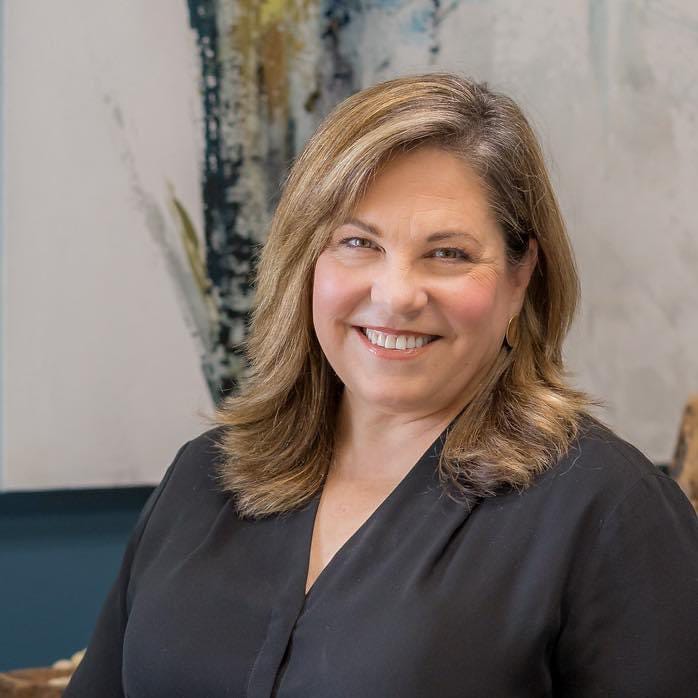
Dana King is a Latter-day Saint and advocate for spiritual growth, racial and community healing, and covenant belonging within the Church. She is co-founder of Black Lives Bless and currently serves her faith and larger community in African American Heritage outreach and bridge-building initiatives.
Thought this might resonate - this is from Scroll 19 of my project The Hidden Clinic. I wrote it as a prayer—not a statement. Not for applause. Just rhythm for witness. https://thehiddenclinic.substack.com/p/to-the-ones-who-were-set-on-fire